
WALSALL (FUSION) ARTISTIC ROLLER SKATING CLUB
A shared commitment to respect, development, performance and enjoyment
1. Our club values
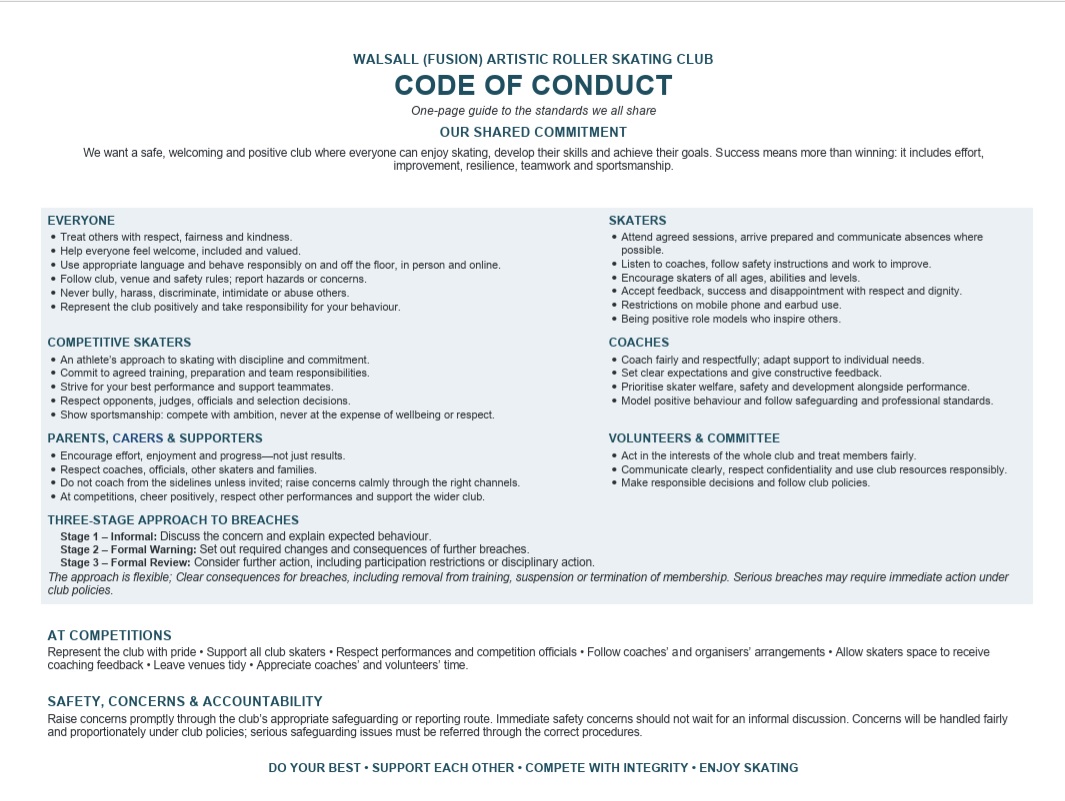
Our club aims to provide a safe, welcoming and positive environment where everyone can enjoy skating, develop their skills and achieve their personal goals.
We value participation, teamwork, commitment, respect and sportsmanship. We encourage everyone to strive for excellence, whether skating recreationally, developing new skills or competing at the highest level.
We believe that success is about more than winning. It includes effort, improvement, resilience, supporting others and taking pride in being part of the club.
This Code of Conduct applies to everyone involved in the club, including skaters, coaches, parents, carers, spectators, volunteers, committee members and supporters.
2. Expectations of all club members
- All club members should aim to be positive role models, demonstrating respect, sportsmanship and behaviour that inspires others, both on and off the rink.
- Treat others with respect, fairness and kindness.
- Help create an inclusive environment where everyone feels welcome and valued.
- Use appropriate language and behave positively, both on and off the rink.
- Respect differences in ability, experience, background and personal circumstances.
- Take responsibility for their behaviour and the impact it has on others.
- Follow club rules, safety procedures and relevant policies.
- Raise concerns appropriately and help protect the wellbeing of others.
- Represent the club positively at training, competitions, events and online.
- Support a culture where everyone can enjoy skating and reach their potential.
Bullying, harassment, discrimination, intimidation, abuse and deliberate unsafe behaviour will not be tolerated.
3. Skaters’ Code of Conduct
Commitment and development
- Make a positive effort to develop skills, technique, fitness and confidence.
- Listen to coaching advice and approach training with a willingness to learn.
- Attend agreed training sessions regularly and arrive on time, notifying the appropriate person of absences where possible.
- Give their best effort while recognising that progress takes time and everyone develops differently.
- Follow coaching instructions, safety rules and club procedures.
- Take responsibility for their own development and celebrate progress and achievements.
Competitive skating and teamwork
- Artistic roller skating is a demanding sport, both physically and mentally. Competitive skaters are expected to show commitment, discipline and an athlete’s approach to training, performance and attitude.
- Prepare for training and competitions to the best of their ability.
Give maximum appropriate effort and strive for their best possible performance.
- Work cooperatively with teammates and contribute positively to the team.
- During training sessions mobile phones and earbuds may only be used with the coach’s permission, for filming techniques or programme run-throughs. They must not distract from training or coaching.
- Accept selection decisions and coaching feedback respectfully, raising questions through the appropriate channels.
- Show good sportsmanship towards competitors, judges, officials and other clubs.
- Accept victories and defeats with dignity and learn from both.
- Recognise that commitment, improvement, resilience and teamwork matter alongside results.
Respect for others
- Encourage and support other skaters, regardless of their ability or competitive level.
- Set a positive example, particularly for younger and less experienced members.
- Respect coaches, volunteers, teammates, opponents and club facilities.
- Avoid negative comments, gossip, intimidation or behaviour that undermines others.
- Follow club arrangements for floor access, supervision and coaching. Do not begin skating or undertake activities outside authorised arrangements.
- Remember that skating should be enjoyable, whether the goal is recreation, personal development or competitive success.
4. Code of Conduct at Competitions
Competitions are an opportunity for skaters and coaches to demonstrate their hard work, commitment and development. They are also an opportunity for families and supporters to celebrate achievements, support teammates and represent the club positively.
Competitive skating is an important part of our club, and we encourage all skaters to strive for excellence and take pride in their performances. How we behave at competitions matters. Our conduct reflects not only on ourselves but also on our teammates, coaches and the club as a whole.
The following expectations apply to all skaters, coaches, parents, carers, spectators and supporters attending competitions.
Representing the club
- Behave respectfully and professionally at all times, including in appearance, language and conduct.
- Remember that behaviour can influence the club’s reputation and future opportunities, including invitations to competitions, training with other clubs and selection for representative teams.
- Where practical and space allows, sit together as a club and present a united, supportive team.
- Treat other clubs, skaters, coaches, judges, officials and spectators with courtesy and respect.
Supporting skaters and teammates
- Encourage and celebrate the performances of all club skaters, regardless of their level, results or competitive discipline.
- Cheer positively for teammates while respecting other competitors and maintaining appropriate behaviour in the stands.
- Avoid loud conversations, disruptive behaviour or actions that distract skaters while others are performing.
- Where practical, skaters and families should support other club members by watching their performances when they are not competing themselves.
- Support should extend beyond individual skaters, families, teams and competitive groups.
Respecting coaches and competition arrangements
- Follow coaches’ instructions and competition rules regarding warm-ups, rink access, performance preparation and team arrangements.
Once the competition is underway, only the coach and the skater or skaters preparing to perform should stand in the designated rinkside area, unless competition officials or the coach authorise otherwise.
- After performing, skaters should follow the agreed arrangements for leaving the rink and speaking with their coach.
- Parents, carers and other supporters should allow skaters space to receive feedback from their coach before approaching them, unless the skater needs immediate support or assistance.
- Avoid giving additional coaching or instructions during competition unless agreed with the coach.
Teamwork and shared responsibility
- Recognise that skaters, coaches, families and supporters all contribute to the competition experience.
- Encourage skaters to support one another through both successful and disappointing performances.
- Respect individual reactions to competition. Give skaters time and space to manage their emotions and receive appropriate support.
- Help younger and less experienced members understand competition expectations and set a positive example through your own behaviour.
Respecting coaches’ time and contribution
- Recognise and appreciate the contribution coaches and volunteers make, including time spent travelling and supporting skaters.
- Where parents or carers are able to help, support practical arrangements such as refreshments and ensuring coaches have reasonable opportunities for breaks and meals.
- Cooperate with reasonable requests that help the day run smoothly and support the wellbeing of everyone involved.
Leaving the venue responsibly
- Leave seating, changing areas and shared spaces tidy and dispose of rubbish appropriately.
- Take personal belongings with you and respect the facilities and property of the host venue.
- Follow the venue’s rules and instructions from competition organisers.
- Remember that we represent the club throughout the event, including when arriving, departing and travelling as a group.
Enjoying competition
- Competition should challenge and inspire skaters, helping them develop confidence, resilience and a sense of achievement.
- Take pride in preparation, effort, sportsmanship and improvement, not just medals or results.
- Win or lose, support one another, learn from the experience and celebrate being part of the club.
Compete with commitment, support each other with pride and remember that skating should be enjoyable for everyone.
5. Coaches’ Code of Conduct
- Treat every skater with dignity, fairness and respect.
- Provide appropriate coaching that supports each skater’s ability, experience, needs and goals.
- Encourage effort, discipline, improvement and high standards of performance.
- Support competitive ambition while prioritising skaters’ physical, emotional and mental wellbeing.
- Set clear expectations for training, attendance, preparation, teamwork and behaviour.
- Give constructive feedback and communicate decisions respectfully.
- Apply selection criteria fairly and explain decisions appropriately.
- Promote sportsmanship, respect for officials and positive relationships between clubs.
- Work cooperatively with other coaches, helpers, parents and committee members.
- Maintain appropriate professional boundaries and follow safeguarding, health and safety and governingbody requirements.
- Report safeguarding or welfare concerns through the appropriate club procedures.
Lead by example and help create a positive environment for recreational and competitive skaters alike.
Coaches should encourage ambition and excellence without promoting a win-at-all-costs attitude.
6. Parents, carers, spectators and supporters
- Encourage effort, enjoyment, progress and personal achievement.
- Praise good sportsmanship and celebrate the achievements of all skaters.
- Support competitive ambitions while keeping pressure and expectations reasonable.
- Respect coaches’ professional responsibilities, competition officials and decisions made during training and competitions.
- Raise questions or concerns calmly and through the appropriate channels.
- Avoid coaching or calling instructions during sessions unless invited to assist by the coach.
- Avoid criticising, comparing or making negative comments about skaters, coaches, officials or other families.
- Respect the privacy, dignity and boundaries of all skaters.
- Follow club rules on viewing areas, photography, filming, safeguarding and access to training sessions.
- Support the wider club community, not only their own child, team or competitive group.
- Meet agreed membership and financial commitments, or discuss difficulties confidentially with the appropriate club representative.
- Report safeguarding, safety or welfare concerns through the appropriate procedures.
Above all, parents and supporters should help make skating a positive experience for everyone.
7. Volunteers and committee members
- Act in the best interests of the whole club.
- Treat all members fairly and respectfully.
- Make decisions transparently, responsibly and in accordance with club policies.
- Support recreational participation, skater development and competitive achievement.
- Use club resources responsibly and help maintain a safe training environment.
- Communicate clearly and respond to questions and concerns appropriately.
- Respect confidentiality and avoid conflicts of interest.
- Work constructively with coaches, skaters, parents and fellow volunteers.
- Follow safeguarding, equality, health and safety and relevant governing-body requirements.
- Recognise and appreciate the contribution of volunteers and members.
8. Safety, wellbeing and inclusion
Everyone shares responsibility for maintaining a safe and supportive club environment.
- Follow safety instructions and report hazards, injuries or unsafe practices promptly.
- Respect physical and emotional boundaries.
- Never engage in bullying, discrimination, harassment, abuse or intimidation.
- Support reasonable adjustments and individual needs wherever possible.
- Respect confidentiality and personal information.
- Follow club safeguarding and welfare procedures.
- Ensure concerns are taken seriously and directed to the appropriate person.
The club should make clear how members can raise concerns, including where the concern involves a coach, committee member or other person in a position of responsibility.
9. Communication and resolving concerns
- Communicate calmly, respectfully and constructively.
Raise concerns directly with the appropriate person where it is safe and appropriate to do so.
- Allow reasonable opportunities for questions, discussion and clarification.
- Respect agreed club processes for addressing coaching, selection, membership and welfare concerns.
- Avoid confrontations during training or competitions that could disrupt sessions or affect skaters.
Safeguarding or immediate safety concerns should be reported promptly through the club’s safeguarding or emergency procedures rather than delayed for an informal discussion.
10. Accountability and consequences
Everyone is responsible for following this Code of Conduct. Where concerns arise, the club will aim to:
- Listen fairly to those involved.
- Consider the nature, seriousness and circumstances of the behaviour.
- Address minor issues through guidance, discussion or appropriate support where possible.
- Take proportionate action when behaviour is repeated, serious or puts others at risk.
- Follow relevant club policies, safeguarding procedures and governing-body rules.
- Protect members from retaliation for raising genuine concerns.
Depending on the circumstances, action may include advice, a formal warning, agreed behavioural measures, restrictions on participation or further disciplinary action in accordance with club procedures.
Serious safeguarding, abuse or safety concerns will be handled through the appropriate reporting processes and will not be treated solely as a minor conduct issue.
The club should ensure that its procedures explain who handles concerns, how decisions are made and how members can challenge or appeal decisions where applicable.
11. Managing Breaches
Everyone is expected to follow the Club Code of Conduct. Where it is not followed, the club will aim to address concerns fairly, consistently and proportionately, helping individuals understand and improve their behaviour.
The club will normally use the following three-stage approach for breaches of the Code:
Stage 1 – Informal Discussion or Verbal Warning
Explain the concern, clarify expected behaviour and give the individual an opportunity to make improvements.
Stage 2 – Formal Warning
If the behaviour continues, issue a formal warning outlining the changes required and the consequences of further breaches.
Stage 3 – Formal Review and Further Action
If concerns persist, refer the matter for formal review. Appropriate action may include a final warning, restrictions on participation or further disciplinary action in line with club policies.
Flexibility and Serious Incidents
The three-stage approach is a framework, not a rigid or automatic process. The club may resolve minor issues informally, repeat a stage where appropriate or move directly to formal action depending on the circumstances and seriousness of the behaviour.
Serious concerns, including safeguarding issues, abuse, bullying, discrimination, threats, violence or significant safety breaches, may require immediate action and will be managed under the relevant club policies.
All concerns will be handled fairly and proportionately, giving individuals an appropriate opportunity to respond. The approach applies to everyone, regardless of their role or competitive status, with decisions made in accordance with club procedures.
Failure to follow the Code of Conduct may result in removal from a training session, suspension or termination of club membership, depending on the nature and seriousness of the breach.
12. Our shared commitment
We are all responsible for the culture and reputation of our club.
We will encourage participation, celebrate improvement, support competitive ambition, respect individual goals and recognise the contribution everyone makes.
We strive to do our best, support one another, compete with integrity and ensure that skating remains safe, rewarding and enjoyable for all.
By being part of the club, we agree to uphold these values and contribute positively to our shared community.
Follow the link to accept the code of conduct

